
Key takeaways:
- If you see swarming termites on your property, don’t ignore them.
- Termite swarms are a clear sign that your property has increased risk for a termite infestation.
- Termite swarms most often appear in the late spring through fall.
- They can resemble flying ants, but there are some clear physical differences.
What Should You Do About Swarming Termites?
If you see signs of a termite swarm, take action – or face the risks of a major termite infestation and potential property damage. Don’t ignore them or shrug them off as “not a big deal” because a termite problem can turn into a very big deal in a short amount of time.
So, what should you do if you see termite swarmers? You have two options:
- Eliminate them. You may want to try DIY termite control solutions, but for the best long-term results, we recommend working with a professional termite exterminator.
- Closely monitor your property for additional signs of an infestation. If you notice any additional signs, take action to eliminate them as soon as possible. The longer you wait, the greater the possibility of damage.
Now let’s dive into greater detail, so you can decide the best course of action for your situation.
What Are Termite Swarms?
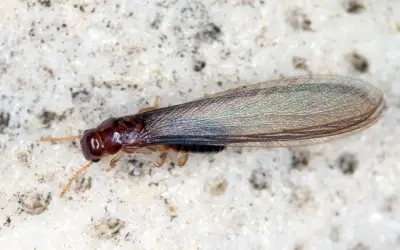
A termite swarm is a huge group of winged termites that appear suddenly and disappear quickly. Their goal is reproduction. When you see a swarm, it’s generally a strong indication that a new colony or multiple colonies will soon take hold nearby.
- Termite swarmers are a special caste of fertile termites called alates.
- Their job is to mate and establish new colonies.
- When the time is right, the winged alates emerge from the ground or cavities in infested wood. They fly a short distance to a swarming location before losing their wings.
- Swarms can have hundreds of individuals.
- The swarms don’t last long – typically, only half an hour to a couple of hours.
- Swarms may congregate indoors or around your yard.
What Should You Do About a Termite Swarm?
When you see a termite swarm, you need to decide right away if this is an imminent threat or not. If there’s an immediate threat to your home, you should eliminate it as soon as possible. If the threat is not imminent, keep monitoring.
1) Eliminate Them
If you see a swarm, you must confirm that it indicates an active infestation that will cause damage to your home or a natural event happening nearby in the yard.
When immediate termite control is necessary:
- Indoor emergence: You see swarmers emerging from baseboards, window sills, door frames, or electrical outlets. This indicates the colony is already under or inside the home.
- Entrance or exit holes: You discover small holes in drywall or wood with mud “capping” or bugs pushing through.
- Piles of wings: You find hundreds of discarded wings on interior window sills or trapped in spider webs in the corners of a room.
- Mud tubes: You locate pencil-sized mud tunnels running up the foundation or along interior walls
Here’s what we recommend:
- Avoid sprays: Spraying swarming termites with over-the-counter contact killers (like Raid) only kills the few bugs you see. It does not harm the colony underground. Worse, it contaminates the area, making it difficult for professionals to apply non-repellent products later.
- Use your vacuum: The best way to handle the immediate mess of a swarm is to vacuum them up. Dispose of the vacuum bag or empty the canister into an outside trash bin.
- Save a sample for identification: Place a few dead termites or wings in a Ziploc bag or a jar with rubbing alcohol. This allows your pest control technician to identify the exact species (Subterranean vs. Drywood), which dictates the treatment plan.
- Work with a professional termite control company: DIY solutions are hit and miss. Professional termite control experts offer advanced solutions like termite baiting and tent fumigation.
2) Continue Monitoring
If the swarm was located outdoors — away from the foundation of your home, near a tree stump, woodpile, or fence — your home may not be under immediate attack.
However, “monitoring” does not mean “doing nothing and hoping the problem goes away.” It means shifting from a passive stance to an active inspection routine to ensure the colony doesn’t migrate toward your house.
When to continue monitoring:
- The swarm was outdoors only: You saw swarmer termites in the yard, but absolutely none inside the house or garage.
- No perimeter evidence: A thorough inspection of your home’s foundation reveals no mud tubes or exit holes.
- Distance: The swarm activity is significantly removed from the structure of the home (e.g., the back fence or a neighbor’s yard).
Not sure what to look for? Check out our full-length article on signs of a termite infestation.
When Do Termite Swarms Come Out?
Termite swarms typically emerge when it’s warmer outside – throughout spring, summer, and fall. It’s a common misconception that termites hibernate or die off during the cooler months. In truth, these pests are active underground all year.
- For subterranean termites, spring and summer are prime swarm times. They prefer to wait after a rainy day, when the wind isn’t strong.
- As for drywood termites, they prefer to wait until the autumn months to swarm. The winter months are too cold for this species, but they aren’t fans of the hot summer months either.
- Invasive Formosan termites swarm at night and are generally at their peak in the late spring and summer.
Do Termites Only Come Out at Night?
Subterranean termites come out during the day, loving that midday sun. Drywood termites, however, prefer to come out at night when it’s cooler.
Why Do Termites Swarm at Night?
During dry periods, night swarmers may emerge to conserve moisture. Drywood termites are particularly prone to drying out, so they pick a time when the sun is down and the air has that evening chill to make their move.
How to Identify a Termite Swarm
Flying termites are often mistaken for flying ants. Flying ants and termite alates are quite similar at first glance, and they’re active at the same time of the year.
These are the main differences that can help you identify which you’re dealing with:
- Flying ants have a set of large and small wings, elbowed antennae, and well-defined waists.
- Termites have two sets of equally sized wings, straight antennae, and thick bodies. Because several types of termites are active in Florida, swarms may occur at different times.
Protect Your Property from Termite Swarms with Hometown Pest Control
If you’ve seen swarmers or piles of dropped wings around your property, that’s a clear sign of termites, and it’s time for action. You’ll want to either eliminate them immediately (if there’s an immediate threat to your home) or keep monitoring.
Outdoor swarms do not necessarily indicate that your house is infested, but we recommend giving us a call to schedule a professional termite inspection. Our termite extermination team has the expertise and tools to identify, treat, and prevent any type of termite infestation.
For major infestations, we offer advanced termite treatments that provide reliable results and long-term protection. If you need help managing termite swarms, call Hometown Pest Control today to schedule a complimentary inspection!