
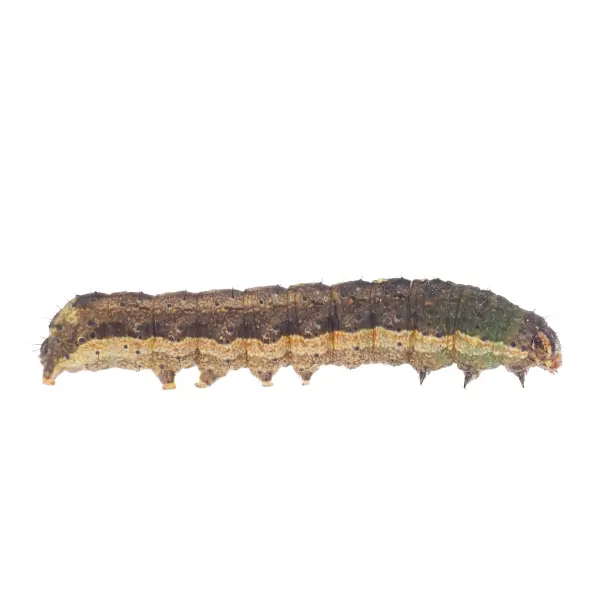
Fall Armyworm
Category Lawn Pests
Actual Size: 1 to 2 inches
Characteristics: Gray, brown, or black with lengthwise stripes running along their smooth, cylindrical bodies. Their heads feature a distinctive white “Y”-shaped marking between the eyes.
Legs: 6
Antennae: Yes
Wings: No
Habitat: Commonly found in agricultural fields, lawns, and grassy areas. They prefer environments with plenty of vegetation, especially crops like corn, sorghum, and rice.
Habits:
- Feed on leaves and stems, causing significant damage to crops and turfgrass.
- Migrate long distances, spreading rapidly during the growing season.
- They are known for their ability to rapidly increase in population.
Fall Armyworm in Florida
Fall armyworms typically begin appearing in August and September around Florida. Increased summer rainfall often leads to larger infestations. These caterpillars are known for their collective feeding behavior, swarming in large groups to devour a wide range of plants, including Bermudagrass, fescue, corn, rice, and various small grains.
Fall Armyworm Habitat
Fall armyworms inhabit turfgrass, landscape plants, and agricultural fields. Their larvae hatch from large clusters of eggs laid above ground and spend 2-3 weeks feeding on the egg remnants and nearby plants. During this time, they can cause significant damage to the vegetation they consume. Once ready, they burrow into the soil to pupate and emerge in late summer or early fall to spread out and find new feeding sites and plants for the next generation.
Fall Armyworm Behaviors, Threats, or Dangers
Fall armyworms are highly adaptable feeders, consuming nearly any part of a plant they find suitable. This makes them a significant economic threat to crops and a cause of cosmetic damage to lawns and landscape plants. Natural predators such as wasps, ground beetles, birds, skunks, and rodents help keep their populations in check, along with local weather conditions. They are not harmful to human health.
Reach out to your nearby pest control specialists when you notice fall armyworm activity.


