
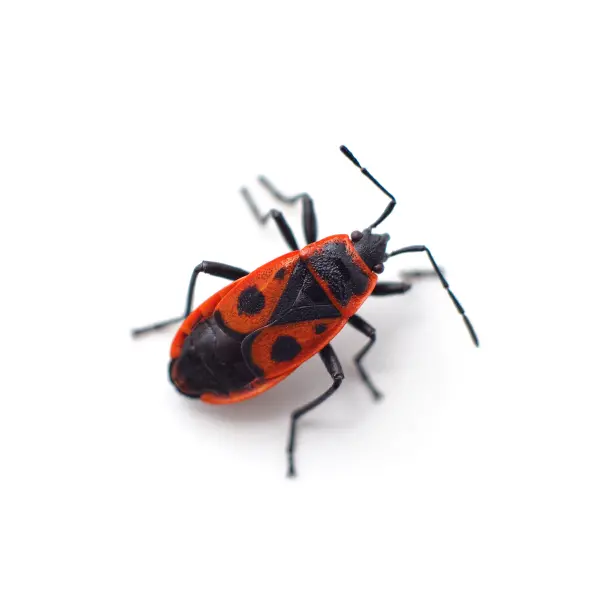
Chinch Bug
Category Lawn Pests
Actual Size: ⅛ to ⅙ inch
Characteristics: Black bodies with white wings, marked by a distinct triangle near the center of their backs. Nymphs are red or brown with a white band.
Legs: 6
Antennae: Yes
Wings: Yes, overlapped on the body.
Habitat: Commonly found in lawns and turfgrass, especially in sunny, open spaces with thatch buildup.
Habits:
- Most active during hot, dry periods, typically late spring through summer.
- They attack grass stems and inject toxins that cause the grass to wilt and die.
- Causes lawn damage that appears as irregular patches of dead or dying grass that expand outward over time.
Chinch Bugs in Florida
Different species of chinch bugs prefer specific types of grass, leaving many lawns susceptible to repeated infestations year after year. When populations grow large, these tiny insects can cause extensive turf damage, particularly during the hot, sunny months of summer when they are most active. Due to their extremely small size, chinch bugs often go unnoticed until visible symptoms, like spreading yellow or brown patches, start to show across your lawn in Florida.
Chinch Bug Habitat
Several chinch bug species target different types of grass. Western chinch bugs go after Kentucky bluegrass, ryegrass, and zoysia, while hairy chinch bugs prefer Kentucky bluegrass, English ryegrass, red fescues, and bentgrass. Southern chinch bugs mainly infest St. Augustine, zoysia, and Bermuda grass. These pests thrive in sunny spots and typically focus on lawns but can also live in leaf litter, thick thatch, or cut grass piles. Some species even infest crops like corn, rice, small grains, and sorghum.
Chinch Bug Behaviors, Threats, or Dangers
Chinch bugs complete their life cycle in as little as six weeks, going through five molts before reaching adulthood. As turf pests, they can pose a serious threat to otherwise healthy lawns. When feeding, they inject a toxin into grass blades that disrupts the plant’s ability to absorb water and nutrients. This causes the grass to wilt and suffer long-term tissue damage, eventually leaving behind widespread yellow or brown patches.
Need help with chinch bugs? Reach out to your local pest control specialists.


